Showing posts with label alans. Show all posts

Wednesday, May 21, 2014

Gearing up for Europe

I'm heading to Europe this summer for paleo research, but I'll have downtime during evenings and weekends. I'd like to do some sightseeing. My interests are in pre-modern historical sites and the outdoors. For the outdoors, I'm specifically interested in places that are good for birding. For the historic sites, I'd be interested in a variety of things, but what I would most like to see is anything relating to Sarmato-Alan history. So far, I've found four of the latter type of places I'm interested in:

I'm going to visit the Louvre while in Paris and heading straight to their steppe nomad art. I'll just avoid the crowds around the Mona Lisa; she doesn't appeal to me anyways.

I'll also be going to the British Museum in London. They have items in their collection, but it doesn't look like anything's on display. Maybe they'll have something tangentially related, though. Even if they don't, they'll have other interesting exhibits.

I'm planning on taking a side trip to Ribchester in England to visit their Roman museum. Ribchester is one of the places Sarmatian auxiliary units were stationed. My trip lines up perfectly with a big celebration they're having with Roman re-enactors and a 3D recreation of what Ribchester looked like when it was a Roman fort.

I'd like to visit a museum or historic site on the Vandal-Alan coalition that invaded Gaul before heading into the Iberian peninsula. Anyone know of a place like that? Or a museum on a broader subject that displays their artifacts? I know there's the Gallo-Roman Museum in Lyon and I could stopover there for a few hours. But I can't tell from their website if they talk about the Vandals and Alans at all in the exhibits.

The places I'm going to are: Paris and Marseille in France; London, Isle of Wight, and Ribchester in Englad; Brussels, Belgium; Basel, Switzerland. I may also stopover in Luxembourg just to cross off another country.
In the fall, I'll be heading back and going to several places in Germany.

Sunday, April 6, 2014

Ossetian Language

Surprise Sarmatian post! Which means I'm procrastinating and will be getting back to work immediately after posting this...

I recently had a conversation with someone which prompted me to try again to find internet sources for listening to or learning bits of the Ossetian language. The Ossetian language is a direct descendant of the Scytho-Sarmatian languages with the Alanian language as the bridge between them. It's the only living member of the Northeast Iranian language group, though modified through proximity to Caucasian languages. The three dialects are the extant Dagor–spoken in western North Ossetia, Iron–spoken elsewhere in Ossetia and the standard for the written language, and the now-extinct Jász language–which was spoken in Central Hungary from the 12th through 15th? centuries. The living full languages closest to Ossetian are Pashto and Yaghnobi in the Southeastern Iranian language group, spoken in Afghanistan and Tajikistan, respectively.

I had more success finding sources this time (as in I had success at all). Quite a bit of it is in Russian, so those of us who don't speak it are at a severe disadvantage. But here are the links I've found:
http://ossetian.free.fr/
http://ossetic-studies.org/en/links
Here's a video of a man speaking Ossetian, but the description says he shifts into Georgian sometimes and I don't know which is which.
And the Wikipedia page actually has quite a bit on phonetics and grammer lifted from the research of Vasily Abaev, though I can't understand the phonetics table.
http://en.wikipedia.org/wiki/Ossetic_language
What I would really like, though, is audio tracks accompanied by the letters and a discussion in English (French is fine too). If any of you know of a site or audiobook or anything like that, please let me know.

The first link is the closest I've found to that. No audio, but it has the words written in English phonetics along with the Cyrilic. I'm sure I'm butchering the pronunciation without audio to reference, but it's at least better than nothing. And as for emphasis, I only know from that Abaev says the difference between "a ___" and "the ___" in Ossetian is the emphasis–the former puts the emphasis on the second syllable, the latter the first.

I'm thinking it might be fun to incorporate some of these while at events–especially if in a zone where "period" is required...which I can't go in yet because I don't have a full period kit. Not enough time or money to put together at the moment. :/
Some that SCAdians might be familiar enough with, or you may use often enough for frequent companions to easily learn are below. The format is English word- Ossetian written alphabet- English phonetic pronunciation. All are from ossetian.free.fr.
Hello                        Салам                 salam
     SCAdians may recognize this because it sounds like (or at least very similar to) the Arabic word for "peace", used in a similar way. Think "peace be upon you/and upon you peace".
How are you            Куыд цæрyт?     Kwyd tsærut?
Goodbye(1)             Фæндараст         fændarast
Goodbye(2)             хорзæй баззай    horzæï bazzaï
     I'm not sure what the difference is.
Please                      дæ хорзæхæй     dæ horzæhæï
Thanks (so much)     (стыр) бузныг    (styr) buznyg
Yes                          о                          o
No                           нæ, нæы             næ, næy
I am sorry                ныххатыр кæн    nyhhatyr kæn
Excuse me               бахатыр кæн       bahatyr kæn

Friday, January 10, 2014

Ask the readers: Animals

One year ago today, we adopted a cat from the local shelter. Tali'Miller-Camp vas Iowa (yes, that is a Mass Effect reference) is a pet- an animal kept for pleasure. But unless your SCA persona is upper class and probably late period, the animals s/he could have kept are unlikely to have been purely pets- they would have had some sort of practical use.

What kind of animals did your persona (or their culture if not them, specifically) keep? What breed? Is it or breeds descended from it still around today? What were they used for?


Unlike my other "Ask the Readers", I can actually answer this one! Collectively, Sarmatians kept horses, cattle, sheep, and dogs.

Apologies for the lack of centering (it's at the top).
Turns out I don't have an image of this on my computer.
I'll replace it with a better version when I get home.

The sheep and cattle they kept for food, wool, and leather. Scythians did too and you can see an example of Scythians making a sheepskin shirt on a beautifully intricate torse made by the Greeks.


Mongolian horse and rider
Image source: http://www.studiomme.com

Their horses were their livelihood. They were meat, clothing, milk, wealth, transportation, and mounts all rolled into one. They would have been short and stocky compared to the horses we're accustomed to seeing in the West today- probably a lot like horses kept by modern steppe nomads.


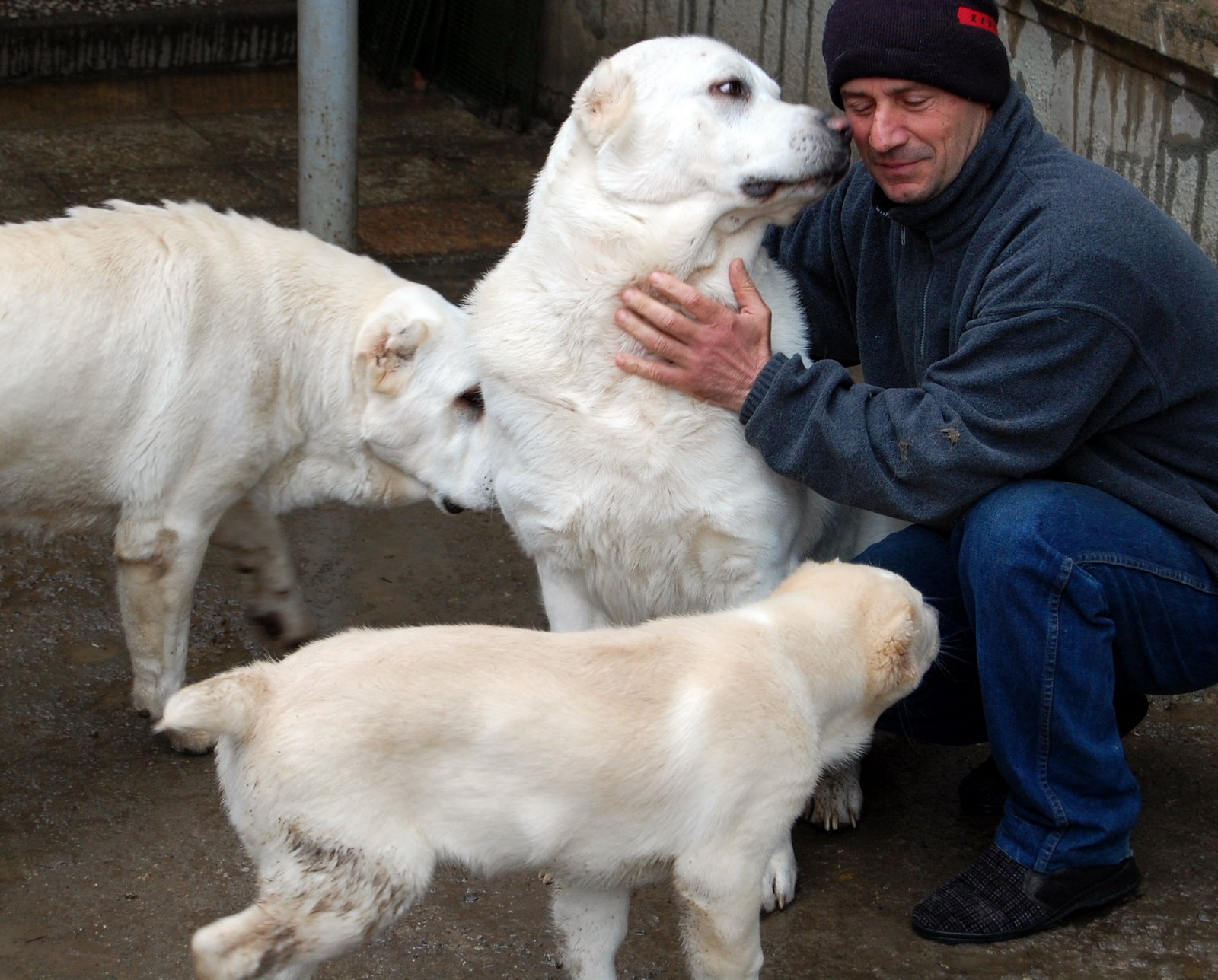
Kazbegi type Georgian Mountain Dog
Image source: http://kaukasus.blogspot.com

Their dogs were big molossers who served as livestock guardians and war dogs. The dogs of the Sarmatians sensu stricto were Sarmatian Mastiffs. The breed kept by the Alans was the Alaunt (which would have been partially descended from the Sarmatian Mastiff. The word 'Alaunt' later came to be used for a general phenotype, rather than a particular breed, in Europe. The original Alaunt probably looked similar to the Kazbegi type Georgian Mountain Dog, which is probably a descendant.

(References will be when I get home. Sorry!)

Tuesday, December 25, 2012

A Sarmatian timeline


Below is a general timeline of Sarmatian activities. Much of it is taken from the New Penguin atlases, and sometimes the only information given is their spot on the map. Other times, they're discussed in more detail in the text. I've supplemented in a few additional notes from elsewhere and will continue to update this post as needed.
Note that overall, there is a general trend among western steppe nomads to eventually be pushed westward by tribes moving in from the east.
  • By 415 BC, the Sarmatians are inhabiting the Russian steppes north of the Caspian Sea.
  • By 192 BC, the Sarmatians are pushing the Scythians westward.
  • By 145 BC, Sarmatians can be divided into three sub-groups (Jazyges, Roxolani, and Alan), each group's area is delineated east-west by major rivers. 
  • By 79 AD, the Sarmatians are being pushed westward to the point that the Roxolani cause the Jazyges to be displaced to the Hungarian steppes.
  • By 230, the Jazyges have been further restricted by Vandals moving in from the north, while the Roxolani are actually pushed back toward the Alans by the Goths moving in from the west.
  • By 305, the Roxolani and Jazyges are no longer on the map. Their areas have been taken over by Asding Vandals and Ostrogoths.
  • By 362, the Alans are feeling the heat from three sides- the Ostrogothic Empire to the West, the Finns to the north, and the Huns to the east. They live in a small area between the Black and Caspian seas north of the Caucasus Mountains. They then expand south into  the mountains.
  • Throughout all this, approximately 250,000 people live on the steppes between those two seas at a given time.
  • By 406, the Huns have taken over the steppes, pushing Germanic tribes west- along with a clan of Alans. The Vandals, Suevi, and the Alan clan invade Gaul at the end of the year.
  • By 420, the aforementioned barbarian pillagers have moved into the Iberian peninsula. As part of a bargain with Rome, the Visigoths pushed most of them into the northwest corner before returning to Gaul.
  • In 429, the Asding Vandals leave their corner of the Iberian peninsula, pick up the Siling Vandals and Alans left in the south, and 80,000 men, women, and children cross the Straight of Gibraltar into Africa. Rome has to cede the western provinces (the northernmost parts of modern Morocco and Algeria) to them in 435. In 442, they trade them for modern Tunisia. The Alan king had died in battle before this and the clan was absorbed by the Vandals they traveled with.
  • By 476, the Alans who stayed behind during the Huns' rule have regained ground in and around the east Caucasus.
  • By 600, the Khazar Turks have pushed the Alans out of their northern reaches. The Alans are able to push the Huns back slightly to the west.
  • By 661, the Khazars have expanded and now rule the Alans.
  • By 1030, the Alans are back on the map in the east Caucasus. (It's a long stretch of time, but stuff happened in between which was not intimated in the book.)
  • By 1071, the Alans now hold almost all of the steppes between the Black and Caspian seas and north of the Caucasus. The Kingdom of Georgia is to their southwest.
  • By 1092, the Alans have lost some of their northern lands and gained some in the eastern Caucasus.
  • From 1221-1222, a group of Mongols originally sent to pursuethe Shah out of his empire to the south fights their way through several groups' lands, including the Alans, and deep into Russia. The Mongol attacks are damaging, but Genghis Khan dies before he can take advantage of them.
  • In 1236, the Mongols return to the Russian steppes. No one has bolstered their defenses and the Alans fall under Mongol subjugation along with other groups. 
That is the last they are mentioned in the New Penguin books, but the Encyclopaedia Iranica gives more information on their eventual fate from other references. After devastating wars in the 14th centuries, the Alans split into three groups- one moved into the foothills of the central Caucasus and became the Iron and Digor Ossetians still around today. Another migrated to Hungary and became the Jasz (It seems I was wrong before about them being descended from the Jazyges. Though I'm still puzzled by the name parallel.) The third took up with the Mongols and were sent to China as guards (the Mongols and Chinese called them "Asu" or "As"), where they were eventually absorbed or killed in battle.

McEvedy, C., 2002, The New Penguin Atlas of Ancient History, 2nd ed., Penguin Books.
McEvedy, C., 1992, The New Penguin Atlas of Medieval History, Penguin Books.
Yule, H., 1913, Cathay and the way thither: being a collection of medieval notices of China, Vol. III, Hakluyt Society, London.
The History of Yuan (pīnyīn: Yuán Shǐ), 1370, ed. Song Lian, Ming Dynasty Bureau of History, China.

Sunday, December 23, 2012

Literature Review: The New Penguin Atlas of---


   This review is actually for two books in a series which both contain information on the Sarmatians and later Alans- The New Penguin Atlas of Ancient History and The New Penguin Atlas of Medieval History by Colin McEvedy. The sheer amount of work that must have gone into compiling all of the information contained therein is staggering. And the concise way in which it's presented is brilliant. The commentary is pretty hilarious at times, too. If you're a map or history buff, no matter what culture you care about, if it was in Europe or the parts of Asia and Africa near it at some point in history (and even pre-history) before the end of 1483, you'll enjoy this book. Best of all, the author is candid about the instances where he makes assumptions that are not well-established. I cannot recommend it enough.

  Each book consists of a collection of maps showing the large-scale evolution of such cultural features as language, writing forms, migration, borders, and population size with a running commentary on the side. Most history books will pick a time and place and talk about it in detail (such as the Italian Renaissance or Tudor England) and they're great for diving into narrow subjects. The purpose of this book is to see the big picture, so it doesn't provide the fine level of detail you can get elsewhere, but is equally as valuable for a different reason. It puts things into perspective. Instead of jumping from Greece to Rome in your history book, you actually get a vague idea of whats going on with the "barbaric" Germanic tribes at the same time (using that word in its original sense). You see the kingdoms of France and Armenia showing up at about the same time on opposite ends of the map. It really helps to remind one that things do not exist in isolation.

  There was enough information about the Sarmato-Alans in the two books that it warrants an entire other post. Be expecting a Christmas present from me. :)

McEvedy, C., 2002, The New Penguin Atlas of Ancient History, 2nd ed., Penguin Books.
McEvedy, C., 1992, The New Penguin Atlas of Medieval History, Penguin Books.

Monday, April 9, 2012

Truth or a lie #1

TRUE(almost)

Depending on who you ask, the Alans were Sarmatians or they weren't. It's not a question of "can they trace their genealogy back to older Sarmatian tribes (because they can)- it's a question of where the cultural cutoff is. They were around much longer than the rest of the Sarmatians, so that's to be expected. I haven't learned the details of the differences yet...I have two library books on the Alans sitting on my shelf staring woefully at me while my nose is buried in various paleontology books and papers.
 Anywho, the Sarmatians proper made it all the way from their homelands north of the Caucasus to Britain. They didn't actually choose to go all the way to Britain- it was a single regiment of Iazyges soldiers in the Roman army. The Alans, however went marching all the way to Gaul, where they eventually joined with the Vandals after their king was killed. They then group crossed Gibraltar and went raiding in northern Africa. Another group of Alans traveled eastward and ended up living in what is now Beijing, China as a military attachment in the Mongol army, who then ruled the city. They didn't quite make it all the way to the easternmost part of Eurasia (that would be north of the Kamchatka Peninsula in Russia), but they still spanned almost the entire continent east-west.
The journeys of various Alan groups are really quite fascinating. They did an awful lot to influence things in western Europe that are never mentioned in world history textbooks. Expect some future posts to give more detailed accounts of their travels and fates.

(Apologies for the lack of references. They'll be added later in April after comprehensive exams are over.)

Wednesday, August 31, 2011

Shire of Shadowdale Event

Hi everyone!

The hiatus is over, though my posts will only be once or twice a month as I'm currently doing a crap-ton of paleontology research and writing. The Sarmatian post I promised in July is still in the works, I'm just making sure I have all my resources straight before writing it.
For now, though, I would like to announce that the Shire of Shadowdale is having an event this year! It's called St. Denys' Day and will be held on October 8th in Oxford, IA, which is just outside of Iowa City and Coralville. I'm the autocrat for the event, which, in non-SCA terms, means I'm in charge of it. The event website is here: http://www.uiowa.edu/~shadowda/StDenys.html It should be a lot of fun.
St. Denys found his fame in Gaul. Gaul was also home to some of the Alans for a while. I plan on giving a lecture on the Alans in Gaul at the event and will post my materials for it afterwards for those who can't be there.

EDIT: It's looking more and more like I won't be giving the lecture. I've spent the past two weeks doing paleo work, which means I haven't had time to do a lot of research into the Alans and get comfortable with them. The only open spot in the schedule was early in the morning when not many people would be there and my time would be better spent making sure everything is being set up as planned.